
The Dark Feminine is NOT the Wounded Feminine
There is a misunderstanding circulating in dark feminine spaces that does real damage. Not just to the concept itself, but to those trying to find themselves within it.
The misunderstanding goes like this: the light feminine is good, healthy, superior. The dark feminine is bad, dangerous, wounded. And therefore, those who are drawn to the dark feminine are either nefarious or broken.
Neither is true.
The dark feminine is not the wounded feminine. And conflating the two misrepresents an entire archetypal tradition and keeps femmes from being able to access the full spectrum of their own nature.
Let me be precise about what I mean.
What the Dark Feminine Actually Is
The dark feminine is not a mood, an aesthetic, or a permission slip for chaos. It is one half of the complete feminine spectrum; the half that governs depth, descent, dissolution, destruction, sexuality, mystery, and transformation.
Where the light feminine tends toward nurturing, softness, receptivity, and radiance, the dark feminine tends toward endings, boundaries, shadow, sovereignty, and erotic power. Neither is superior. Neither is "more feminine." They are a polarity, and someone in their wholeness lives in both.
The dark feminine has been personified across cultures and throughout history in goddesses such as Kali, Lilith, Hecate, Persephone, the Morrigan, and Inanna descending through the seven gates. These are not cautionary tales. These are maps of feminine initiation. And these initiations are what bring us into more fully expressed, mature, and sovereign versions of ourselves.
When we strip the dark feminine down to its essential nature, we are talking about power that does not seek permission. Desire that does not apologize. Destruction that serves transformation. Shadow that, when integrated, becomes a source of extraordinary strength and wisdom.
The Wound Is Not the Darkness
Here is where the confusion takes root: darkness, when it is repressed, does indeed become distorted. Sexuality pushed underground becomes either numb or compulsive. Anger denied expression becomes passive manipulation. The need for sovereignty—if not honored—becomes control. Grief unexpressed becomes bitterness.
This is the wounded feminine. Not the dark feminine itself, but the dark feminine that has been refused, suppressed, and therefore forced into distorted expression.
The wound is not in the darkness. The wound forms when we repress it.
This distinction matters enormously. Because when we call the dark feminine "toxic" or "manipulative," we are actually describing what happens when women have been so thoroughly conditioned against their own power that it leaks out sideways. We are describing the symptom of a culture that has been punishing feminine darkness for centuries. And we are, perhaps unconsciously, continuing that punishment by labeling the darkness itself as the problem.
The problem is never the darkness. The problem is what happens to darkness that is unrecognized, repressed, and underexpressed.
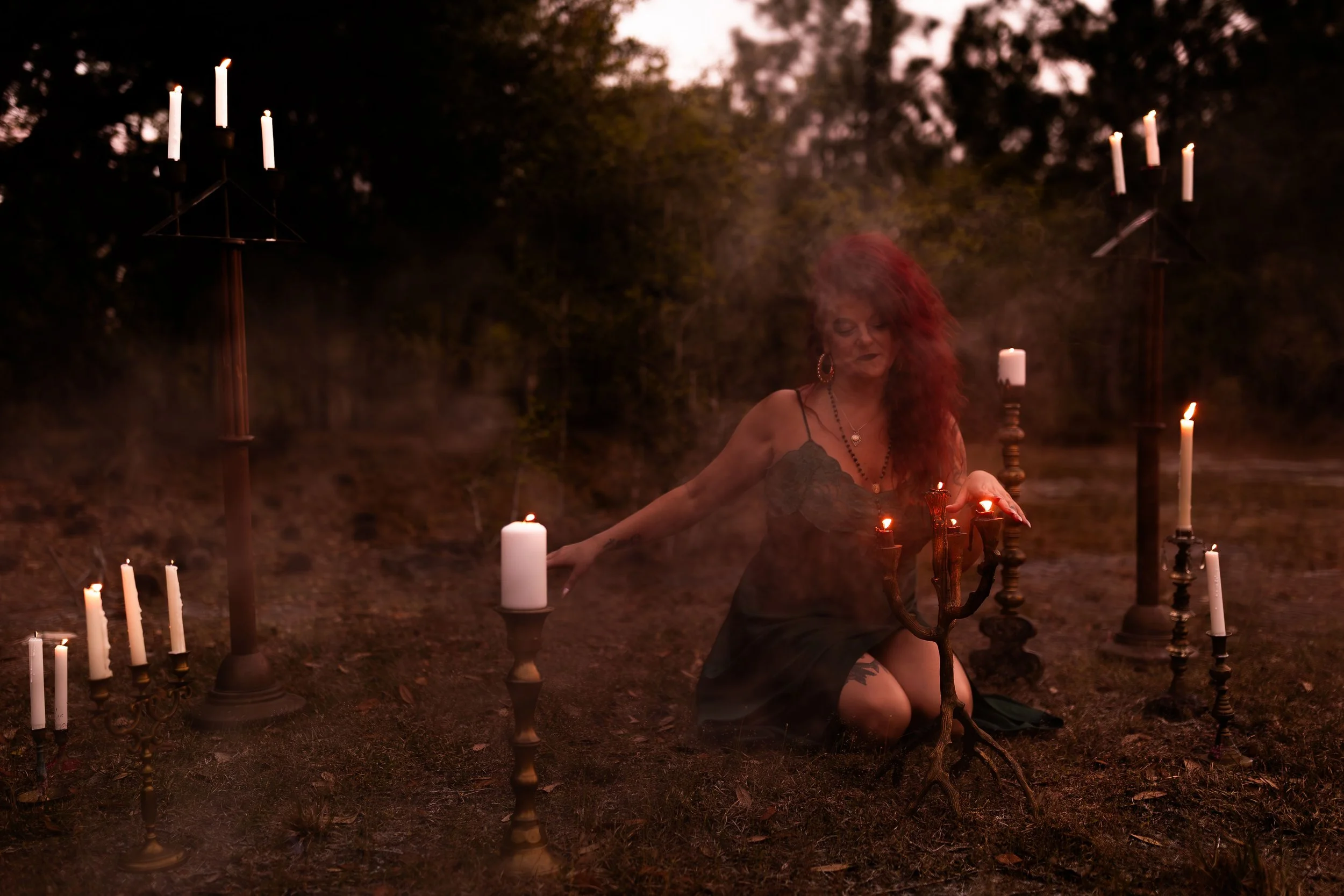
Photo: Divine Rising Visuals
Both Sides of the Spectrum Can Be Expressed in Wounded Ways
This is the nuance that most dark feminine content misses entirely: the light feminine can also be expressed in wounded ways! This is equally important to understand.
Nurturing, when it comes from depletion rather than abundance, becomes martyrdom. Receptivity, when it is not paired with discernment, becomes passivity and people-pleasing. Softness, when it is performed rather than felt, becomes a mask that slowly suffocates the person wearing it. These are also versions of the wounded feminine, and they are the wounds that keep us docile, minimized, and easily manipulated.
The distinction we need is not between light feminine (healthy) and dark feminine (wounded). It’s between any quality of the feminine—light or dark—expressed from wholeness versus suppression.
Wholeness knows when to offer nurturing and when to hold boundaries. It knows when to soften in gentle grace and when to ignite in erotic vitality. It knows desire and has the sovereignty to pursue it consciously. It honors rage and has the tools to move through it with conscious reverence.
Suppression distorts everything it touches.
What the Dark Feminine Asks of You
The dark feminine is not asking you to become dangerous. It is asking you to become whole.
That wholeness requires a willingness to descend: to stop performing the version of yourself that is palatable and start excavating the version that embodies deeper truth.
It may not be comfortable or easy, but this is where true reclamation of wholeness happens.
In Esoeroticism, the dark feminine is not a brand identity or a rebellious posture. It is the philosophical and somatic foundation of the work. It is the understanding that your darkness is not your damage, it is your depth. That the parts of yourself you were taught to fear, suppress, or apologize for are often the very parts that contain your most potent life force.
Again, the wound is not in embodying the darkness. The wound is in avoiding it.
The Question Worth Sitting With
If the dark feminine is not the wounded feminine, then the real question becomes: where have you been taught that your darkness is a problem?
Where have you swallowed the anger? Dimmed the desire? Performed the lightness because your fullness felt like “too much”?
That is where the work begins. Not in becoming someone new, but in remembering what was always already yours.
XXX,
Crimson
Crimson is the founder of Esoeroticism, a dark feminine modality that works at the intersection of erotic embodiment and esoteric ritual. If this distinction is new to you, begin with What Is Esoeroticism? or explore The Difference Between the Dark and Light Feminine.
